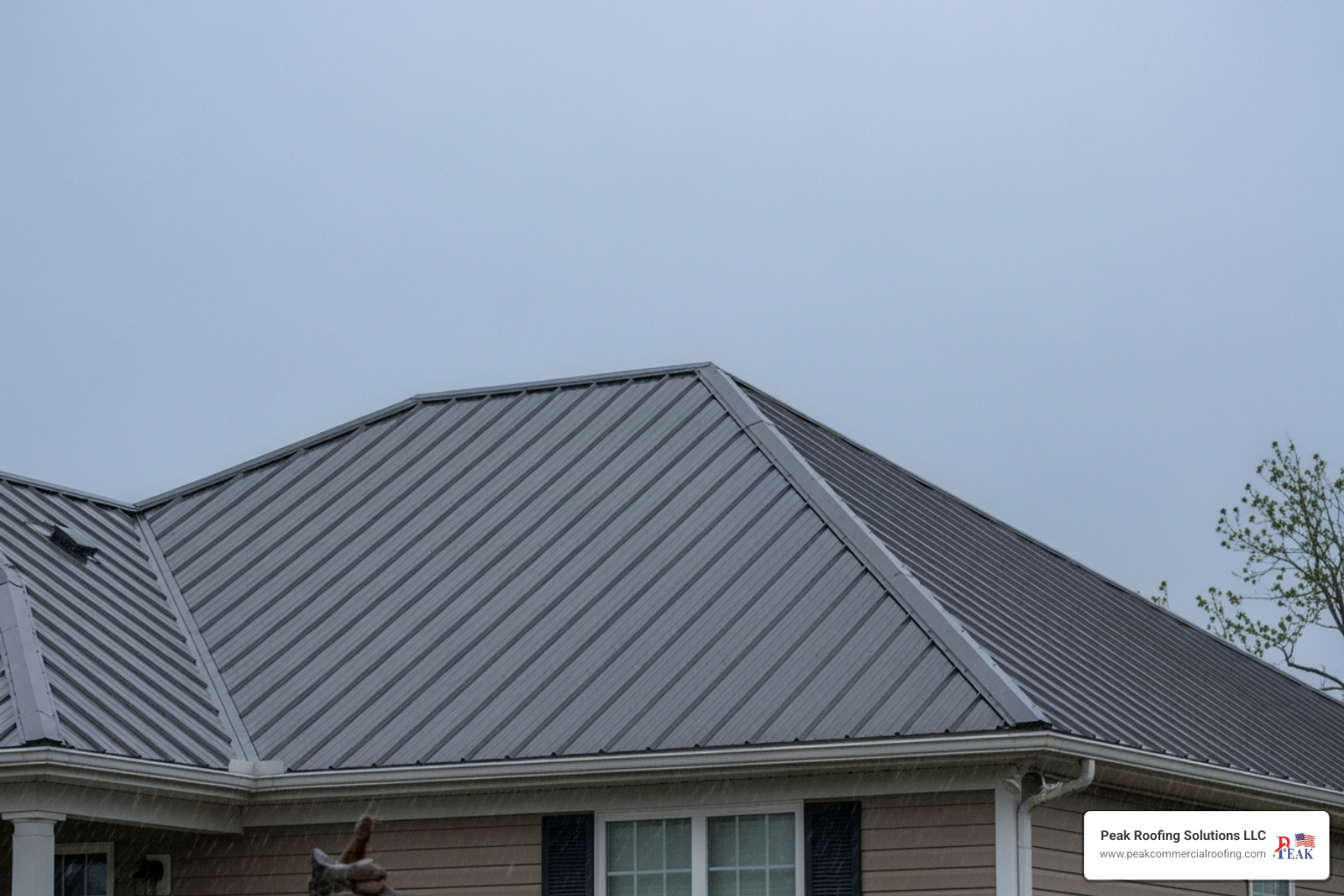
Why Hurricane Resistant Roofing Is Your Home's Most Critical Investment
Hurricane resistant roofing is the single most important defense your property has when a major storm makes landfall. Here's a quick overview of what makes a roof hurricane-resistant:
| Feature | What to Look For |
|---|---|
| Wind Rating | ASTM D7158 Class H (up to 150 mph) or metal rated 160 mph+ |
| Impact Rating | UL 2218 Class 4 (highest available) |
| Roof Shape | Hip roof (four-sided slope) over gable |
| Deck Sealing | Self-adhered membrane or taped seams |
| Fasteners | Ring-shank nails, hurricane clips/straps |
| Standard | IBHS FORTIFIED Roof designation |
Every year, hurricanes cause billions of dollars in losses for homeowners across the country. In Louisiana, that risk is not abstract — it shows up on your doorstep, sometimes with little warning. When sustained winds exceed 130 mph, the difference between a roof that stays and a roof that peels back often comes down to decisions made before the storm: the material chosen, the nails used, and whether the deck was properly sealed.
Most people think about their roof only when something goes wrong. But for property owners protecting long-term assets, the roof is a system — one that affects insurance premiums, resale value, and structural integrity all at once.
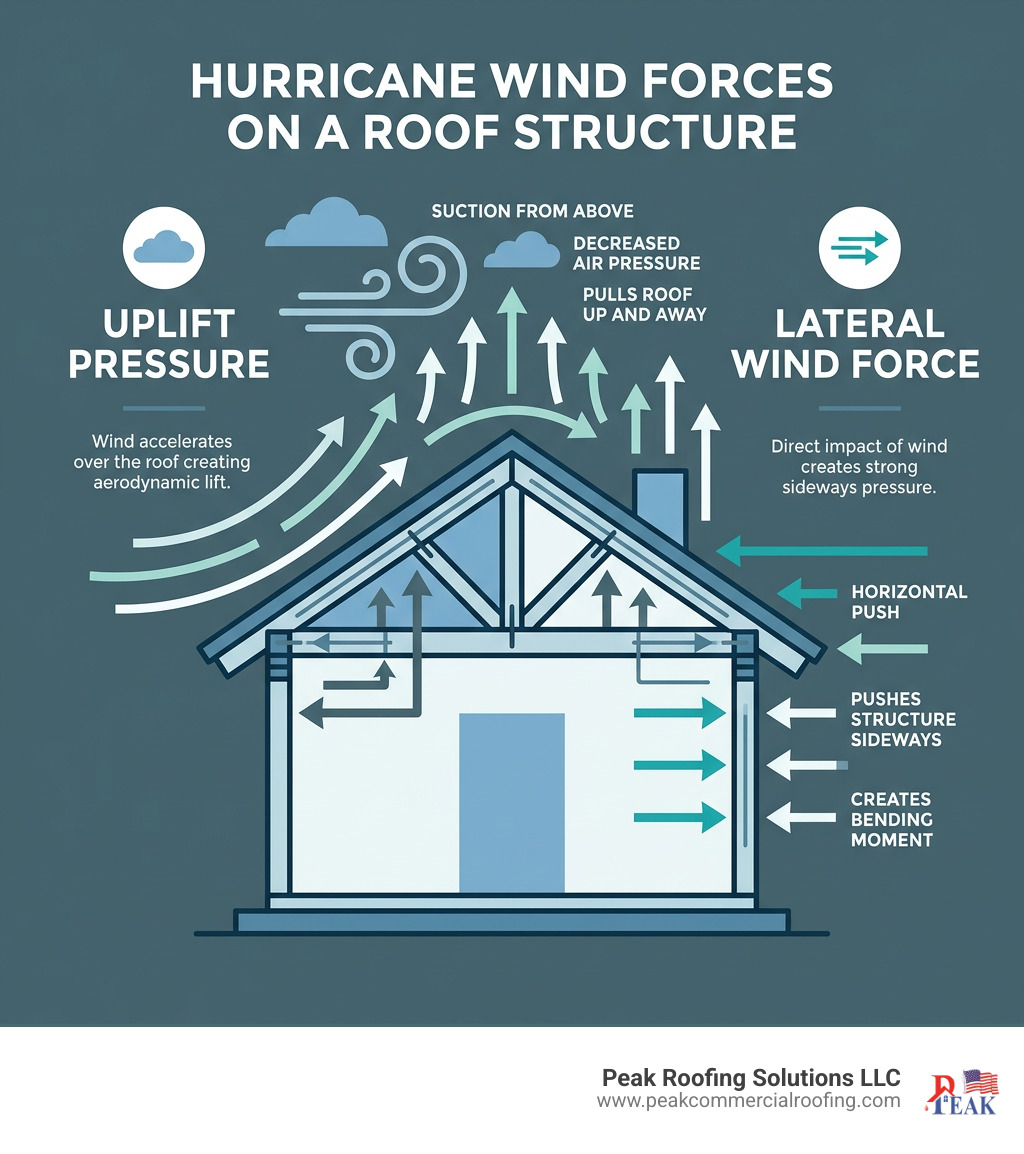
Wind doesn't just push horizontally. It creates uplift pressure that tries to pull the roof up and away from the walls. It forces water through the smallest gaps. It turns unsecured debris into projectiles. A standard roof is not designed to handle that. A hurricane-resistant roof is.
I'm Brandon Lancaster, founder of Peak Roofing Solutions, and through years of storm restoration work across South Louisiana, I've seen how the right hurricane resistant roofing system separates minor damage from catastrophic loss — and I'll walk you through exactly what that looks like.
Understanding Hurricane Resistant Roofing Materials
When we sit down with homeowners in Baton Rouge or Lafayette, the first question is usually: "What is the strongest material I can get?" The answer depends on your budget, the structure of your home, and how long you plan to live there.
Choosing a material isn't just about picking a color. It’s about understanding wind speed ratings and impact resistance. In Louisiana, building codes often require roofs to withstand wind speeds ranging from 130 to 180 mph. If your roof isn't up to that task, a Category 3 or 4 storm could peel it like a banana.

Comparing Material Durability and Lifespan
Not all materials are created equal when the wind starts howling. Here is how the most common options stack up:
| Material | Wind Resistance | Lifespan | Impact Resistance |
|---|---|---|---|
| Architectural Shingles | Up to 130 mph | 20-30 Years | Good (Class 3) |
| Impact-Resistant Shingles | Up to 150 mph | 25-40 Years | Excellent (Class 4) |
| Metal Roofing | 140-160+ mph | 40-70 Years | High |
| Concrete/Clay Tile | 125-150 mph | 50+ Years | High (but brittle) |
| Synthetic/Composite | 180-190+ mph | 50+ Years | Exceptional |
For those looking for a long-term solution, a Metal Roof Replacement is often the gold standard. Metal panels are interlocked and fastened securely to the roof deck, making them incredibly difficult for wind to catch. However, if you prefer the look of traditional homes in New Orleans or Broussard, a Shingle Roof Replacement using high-wind rated products is a fantastic, budget-friendly alternative.
The Science of Hurricane Resistant Roofing Shingles
You might be wondering, "How can a piece of asphalt survive a hurricane?" The secret lies in SBS-modified asphalt. Standard shingles can be brittle. SBS (Styrene-Butadiene-Styrene) is a type of rubberized polymer blended into the asphalt. This makes the shingle flexible, allowing it to "rubber band" back into shape after being hit by hail or debris rather than cracking.
When we talk about hurricane resistant roofing, we look for two specific certifications:
- UL 2218 Class 4: This is the "steel ball test." Technicians drop a 2-inch steel ball from 20 feet onto the shingle twice in the same spot. To pass, the shingle cannot show any cracks or ruptures.
- ASTM D7158 Class H: This rating means the shingle has been tested to resist uplift in winds up to 150 mph.
At Peak Roofing Solutions LLC, we often use ATLAS products like the StormMaster® Shake. These shingles feature Core4® Technology, which uses enhanced virgin polymers to create a shingle that won't give up when the weather gets ugly. They also incorporate HP42® technology, which provides a wider nailing area (the "Sweet Spot") to ensure our installers hit the mark every time.
How Innovations in Hurricane Shingles Protect Your Roof have come a long way, and for those who love the look of metal but the style of shingles, we even offer Metal Shingles that provide the best of both worlds.
Metal and Tile: Heavy-Duty Hurricane Resistant Roofing Options
If you are located in coastal areas like Houma or Morgan City, you might want something even more robust. Metal roofing is a top-tier choice because the panels are often full-length, meaning there are fewer seams for wind to exploit. Aluminum is particularly popular near the coast because it resists salt-spray corrosion.
Concrete and Clay Tiles are another heavy-duty option. Their weight is actually an advantage in high winds—they are hard to lift. However, if you choose tile, we must evaluate your home's structure. Tiles are heavy (8–12+ lbs per square foot), and not every Louisiana home is built to carry that load. When installed correctly with mechanical fasteners or two-part expanding foam, they can resist winds exceeding 125 mph. For more technical details on these, check out this Clay or Concrete Tile Resource Guide.
Critical Design and Installation Standards
You can buy the most expensive shingles in the world, but if they are installed poorly, they will still end up in your neighbor's yard. The geometry of your roof and the way it’s attached to your house are just as important as the material itself.
Roof Shape and Aerodynamics
Did you know that the shape of your roof can determine if it survives a storm?
- Hip Roofs: These have four sloping sides. They are naturally aerodynamic and perform significantly better in high winds because they "shed" the wind from any direction.
- Gable Roofs: These have two sloping sides and two flat vertical ends. Those flat ends act like sails, catching the wind and creating massive pressure that can pull the roof off.
If you have a gable roof, we recommend bracing the ends during a Roof Installation to ensure they don't collapse inward or get pulled outward during a hurricane. Experts also suggest a 30-degree roof slope as the "sweet spot" for resisting uplift.
The FORTIFIED Roof Standard and Requirements
In the roofing world, the "Gold Standard" for safety is the FORTIFIED Roof designation by the Insurance Institute for Business & Home Safety (IBHS). This isn't just a fancy name; it’s a rigorous set of engineering standards designed to keep your roof on your house.
The main requirements for a FORTIFIED Roof include:
- Enhanced Nail Spacing: Using ring-shank nails (which have ridges like a screw) in a tighter pattern to double the holding power.
- Sealed Roof Deck: This is a secondary water barrier. If your shingles blow off, this seal prevents water from entering your attic.
- Locked-Down Edges: Using wider drip edges and fully adhered starter strips to prevent the wind from getting a "thumb" under the edge of the roof.
You can read the full FORTIFIED Roof Standard 2020 to see the level of detail required. At Peak Roofing Solutions, we are proud to offer these high-level protections to our clients in Acadiana and beyond.
Fasteners and Underlayment: The Hidden Heroes
The "hidden" parts of your roof are often what save your home.
- Ring-Shank Nails: Unlike smooth nails, these have rings that grip the wood fibers, making them almost impossible to pull out.
- Self-Adhered Membranes (Peel-and-Stick): This underlayment sticks directly to the wood deck. It creates a watertight seal that keeps your home dry even if the primary roofing material is long gone.
- Hurricane Clips and Straps: These metal connectors anchor your roof rafters directly to the walls of your home. Without them, the entire roof structure can lift off during extreme gusts.
If you suspect your current fasteners are failing, it’s vital to address it before storm season. We provide Roof Leak Repair services that often uncover these underlying issues before they become disasters.
Maintenance and Insurance Benefits
Investing in hurricane resistant roofing isn't just about safety—it’s also about your wallet. In Louisiana, many insurance companies offer significant "Wind Mitigation" discounts for homeowners who upgrade their roofs to meet certain standards, like the FORTIFIED designation or using Class 4 shingles.
The Power of Professional Inspections
We recommend having your roof inspected at least once a year, preferably before June 1st (the start of hurricane season). At Peak Roofing Solutions, we offer a Commercial Roof Inspection for business owners and residential inspections for homeowners.
For large properties or hard-to-reach areas, we even use Infrared Drone Inspections. These drones can spot moisture trapped under the surface and identify loose components that the human eye might miss from the ground.
Preparing for Storm Season in Louisiana
Preparation is a year-round job. Here are a few things we recommend every homeowner in the Lafayette and Baton Rouge areas do:
- Tree Trimming: Dead or overhanging branches are "roof killers" during a storm. Trim them back at least 10 feet from the roofline.
- Gutter Cleaning: If water can't get off your roof, it will find a way into your roof.
- Secure the Perimeter: Loose patio furniture can become a projectile that punctures even the toughest impact-resistant shingles.
If a storm does hit, don't wait to call for help. We provide Emergency Services to tarp roofs and prevent further damage. Whether you need Roof Damage Repair or specific Roof Repair for Storm Wind Damage, getting a pro on-site quickly is the key to a successful insurance claim.
Frequently Asked Questions about Hurricane Resistant Roofing
What is the best roof shape for high winds?
As we mentioned earlier, the hip roof is the champion of wind resistance. Because it slopes upward from all four sides, it doesn't have a flat "face" for the wind to slam into. This shape naturally directs wind over and around the house, reducing the pressure that causes roofs to lift. If you have a gable roof, don't panic—you can still make it very resistant by adding structural bracing in the attic.
Can I upgrade my existing roof without replacing it?
Yes! If your shingles are still in good shape but you're worried about the structure, there are "retrofit" options. One popular method is applying closed-cell spray foam adhesive along the joints of your roof sheathing from inside the attic. This can triple the wind uplift resistance of your roof deck. You can also have a professional install hurricane straps if your home was built before they were required by code.
Do impact-resistant shingles really lower insurance?
In many cases, yes. Most major insurers in Louisiana provide premium credits for roofs that have a UL 2218 Class 4 rating. This is because these roofs are much less likely to suffer damage from hail or flying debris, which saves the insurance company money. Over time, these savings can actually pay for the price difference between standard and impact-resistant shingles. Always ask your agent for a "Wind Mitigation" form to see how much you could save.
Conclusion
At Peak Roofing Solutions LLC, we know that your home is more than just a building—it’s where your family stays safe. Serving South Louisiana from Baton Rouge to New Iberia and Lafayette to New Orleans, we specialize in providing hurricane resistant roofing that stands up to Mother Nature’s toughest tests.
We don't just "slap on shingles." As an ATLAS-certified contractor, we use high-performance systems designed to handle 150 mph winds and heavy impacts. Plus, our transparent pricing and certifications with brands like Mulehide mean you can trust the quality of our work.
Whether you need a quick repair or a full Roof Replacement Services, we are here to help. Don't wait until the next "Big One" is in the Gulf—give us a call today and let's make sure your home is ready for whatever comes its way. Stay safe, Louisiana!